The Legend of Heroes: Trails in the Sky SC Review
An extraordinary sequel driven by Estelle's growth, the culmination of Liberl's mysteries and a battle system I still prefer in its original form.
Go to game entry →Watch original video review →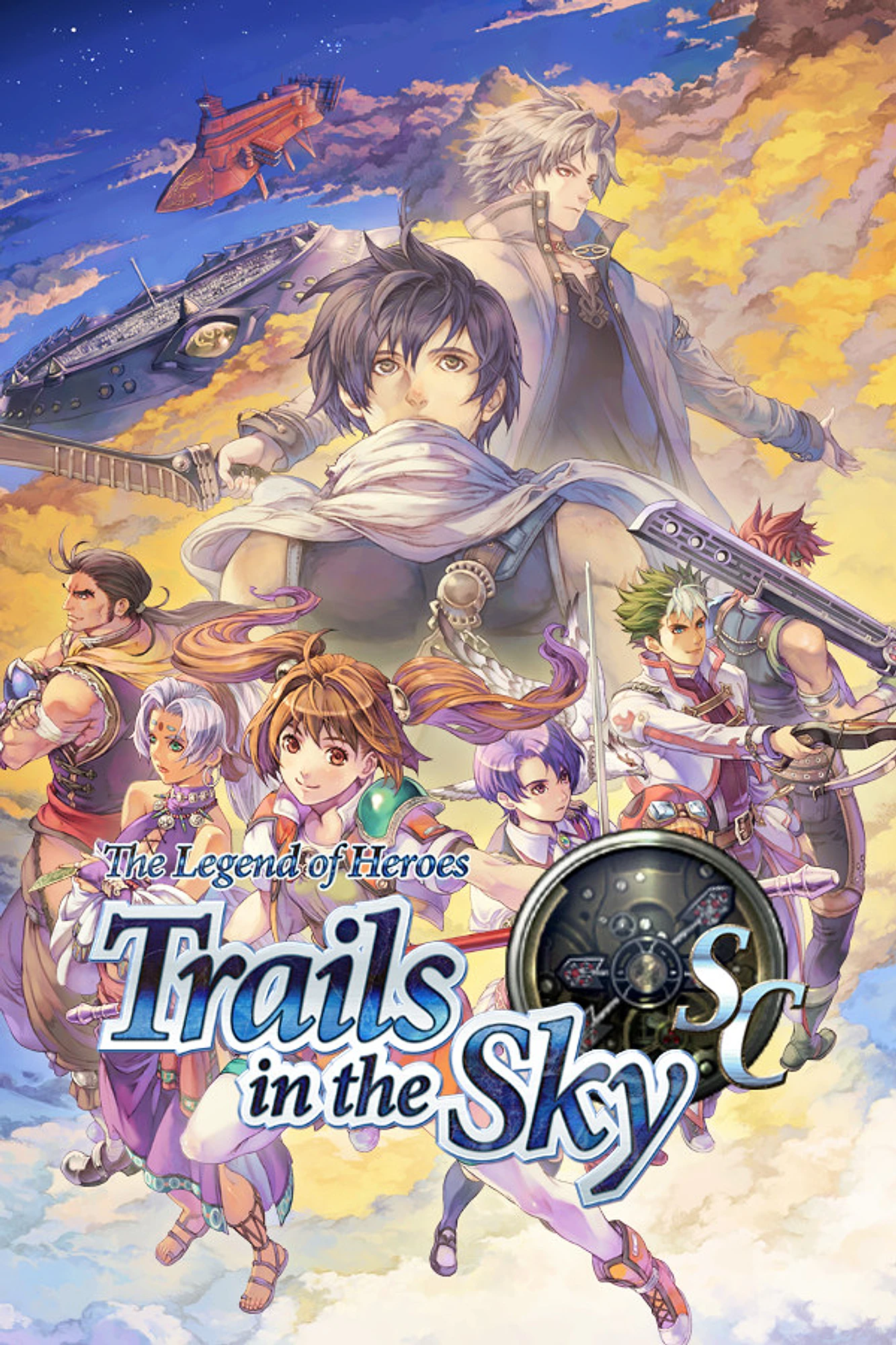
The verdict
Trails in the Sky SC is one of the strongest examples of Falcom's patient storytelling paying off. Its predecessor spent an entire adventure making Liberl feel like home; Second Chapter turns that familiarity into emotional stakes. The search for Joshua gives Estelle's journey a deeply personal centre even as Ouroboros and a larger crisis come into view.
My 9.4/10 rating belongs to the original SC I played and loved. The 2026 remake looks spectacular and has received a positive reception, but my comparison video explicitly distinguished those external assessments from my own experience; I have not claimed to have finished the remake.
Estelle, Joshua and the people of Liberl
Estelle remains one of my favourite kinds of leads: outspoken, occasionally impulsive and willing to change as experience challenges her assumptions. Searching for Joshua becomes a journey toward independence rather than a passive rescue plot. Agate, Scherazard, Olivier, Kloe, Tita and Zin add different voices, while returning citizens and ordinary Bracer requests keep the world convincingly alive.
The villains are distinctive personalities rather than anonymous obstacles. The dramatic reveals land because so many seemingly unimportant conversations and relationships were established long before the crisis began. Revisited regions can make the middle chapters feel repetitive, but I value how the inhabitants change while the geography remains familiar.
Why the original combat still wins for me
The original uses a position-sensitive, turn-based battlefield where casting time, movement, Crafts, Chain Crafts, CP and visible turn bonuses make preparation rewarding. Interruption and a well-timed S-Craft can turn a battle around; powerful enemies demand more than a string of flashy attacks. I love that it invites thinking several turns ahead.
The remake's Quick Battle and Command Battle hybrid, improved responsiveness and linked combat features are more immediately accessible. Yet speed does not necessarily replace the tactical identity of the old system. Published players have also debated some of the remake's boss mechanics. For the style of turn-order and orbment-based planning I enjoy, the original remains my choice.
Two presentations, two strengths
The new version offers detailed 3D locations, camera work, performances and useful travel conveniences. Those are real improvements for players who dislike backtracking or want more cinematic storytelling. But the original's portraits, restrained animations and illustrated atmosphere communicated tenderness in their own way, and I remain particularly attached to that look.
The music is another close comparison: new arrangements give familiar themes a fresh sound, while the original instrumentation carries its own memories. The remake offers music choices, which is the best possible compromise. English voice acting is attractive, but I also appreciate the expressiveness of the old localisation.
Final thoughts
SC is not merely a famous sequel awaiting a remake. The original still has remarkable characters, deliberate tactical combat and a uniquely intimate atmosphere. The remake may be a better entry point for newcomers who value convenience and spectacle, while veterans may reasonably prefer the original. My S-tier verdict concerns the version I experienced; there is no need to invent a personal score for the remake.