The Complete Xeno Lore Timeline — Xenogears, Xenosaga & Xenoblade
One creative lineage. Several distinct fictional histories. Here is the chronology inside each continuity — and where the tantalising cross-series clues stop being proof.
Go to Xenogears game entry →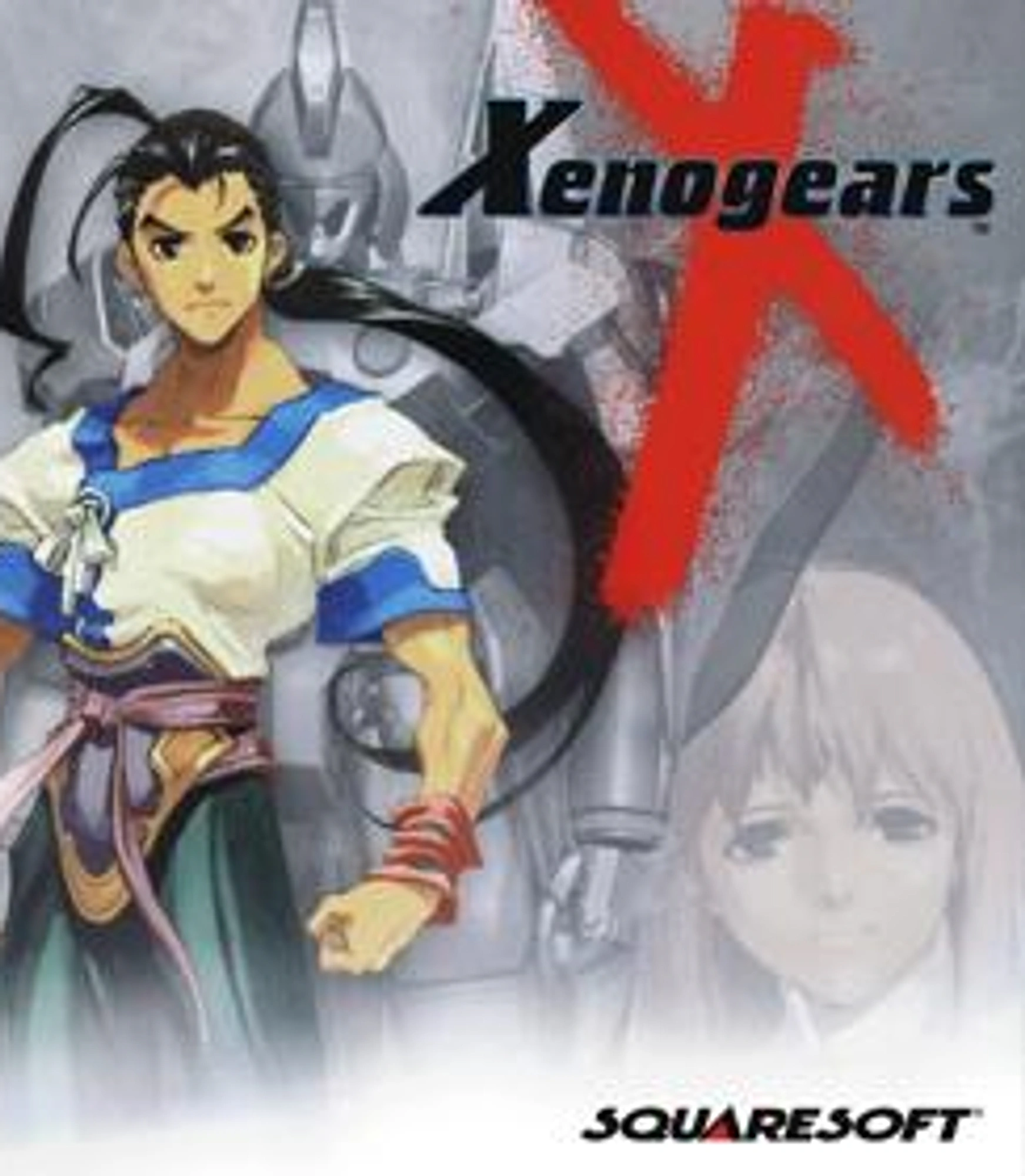
This guide reveals identities, major twists and endings from the Xeno games, including Future Redeemed. Read the spoiler-light review first if you are new to the story.
First, the essential canon distinction
There is no confirmed, single in-universe chronological order in which Xenogears leads to Xenosaga, which leads to Xenoblade Chronicles. They share creators, images, religious and philosophical vocabulary, technological motifs and occasional deliberate references, but that is not the same as an established crossover timeline.
Xenogears belongs to Square's original setting. Xenosaga was developed at Monolith Soft and published by Namco as a fresh project. Xenoblade was developed at Monolith Soft under Nintendo. Xenosaga was expressly described by its creators as not a direct Xenogears prequel or sequel; later references can enrich a connection theory without retroactively rewriting that production fact.
Read the timelines below as four parallel tracks. Only the relationships stated within a track are treated here as established story history. Spoilers extend through Xenoblade Chronicles 3: Future Redeemed.
Track A: Xenogears — the Perfect Works six-episode plan
- Episode I • the interstellar ageHumanity leaves Earth, later known as Lost Jerusalem; an expansive spacefaring federation arises. An interstellar war leads to the construction of Deus and the weapon's disastrous attempt to escape confinement.
- Episode II • about 10,000 years before the gameThe Eldridge crashes. Abel survives, the Wave Existence is imprisoned, the original Mother/Kadomony system begins engineering human life, and Cain, Miang and the Gazel Ministry set the Deus reconstruction cycle in motion.
- Episode III • about 4,000 years before the gameIn Zeboim, the Contact lives as Kim, loves that era's Elly, and creates Emeralda. The civilization collapses after political and biological crises and violent intervention.
- Episode IV • about 500 years before the gameSophia and Lacan's relationship unfolds during the Solaris–Shevat conflict. Sophia dies; Lacan becomes Grahf; Krelian turns his grief into a program of radical transcendence.
- Episode V • the released XenogearsFei and Elly confront their inherited roles, uncover Solaris and Deus, free the Wave Existence and break the machine's control.
- Episode VI • proposed futurePerfect Works sketches a future sixth episode but does not provide a released, completed plot. Any purported full Episode VI narrative is conjecture, not a published sequel.
The six-episode structure is a plan for Xenogears lore, not a licensed instruction to insert the stories of Xenosaga or Xenoblade into missing slots. Perfect Works is a valuable contemporary companion book; English translations circulating online are unofficial.
Track B: Xenosaga — its own ancient past and space opera
- Ancient Earth / Lost JerusalemThe original Zohar's discovery, ancient religious mysteries and the disappearance or isolation of Earth establish the distant background. These concepts echo Xenogears but are reinterpreted here.
- Far-future humanity and the U.M.N.Humans populate space; Vector, the U-TIC Organization and other factions pursue the Zohar. Gnosis threaten ordinary reality, while U-DO and the imaginary domain complicate any simple division between science and divinity.
- Episode I: Der Wille zur MachtShion Uzuki and the android KOS-MOS become entangled in the Gnosis crisis, the Zohar, the Elsa crew, Jr., MOMO and the mysteries around the Miltian conflict.
- Episode II: Jenseits von Gut und BöseThe Militia legacy and the U.R.T.V. brothers take center stage, expanding the story of Albedo, Jr., Gaignun, the Zohar and U-DO.
- Episode III: Also sprach ZarathustraShion confronts Vector and her past. Wilhelm's Eternal Recurrence project, the Testaments, KOS-MOS, chaos and the true stakes of the universe are revealed. Its ending launches a search rather than reproducing Xenogears' Eldridge disaster.
Xenosaga Episode I, II and III are a real trilogy, though other side works and adaptations contribute details. Its Abel, Zohar, quasi-religious structures and planned wider cosmic history invite comparisons with Xenogears, but their roles and consequences differ. Identical names are not sufficient evidence that the characters are literally identical across licenses.
Track C: Xenoblade 1, 2 and 3 — one confirmed intertwined saga
- The old-world experimentScientist Klaus activates the Conduit through the Trinity Processor, involving Ontos, Logos and Pneuma. The experiment reshapes reality and divides Klaus's fate across two worlds.
- World one: Bionis and MechonisThe world of the first Xenoblade Chronicles forms around Zanza and Meyneth, with Alvis linked to Ontos. Shulk and his allies eventually overthrow Zanza and create the conditions for a future beyond him.
- World two: AlrestThe surviving half of Klaus becomes the Architect. He builds a new ecology around Titans, Blades and the Cloud Sea. Rex, Pyra/Mythra and their companions confront Malos and the Architect's legacy. Much of Xenoblade 1 and 2 leads toward connected conclusions rather than a neat sequential gap.
- The worlds approach one anotherThe inhabitants of the two worlds learn that their realities are moving toward collision. Nia and Melia help preserve the future using Origin, an extraordinary archive and reconstruction system.
- Future Redeemed • before Xenoblade 3's main storyMatthew, A, Shulk, Rex and others confront Alpha and the history of the first City inside Aionios. The old-world radio broadcast includes explicit nods toward other Xeno works, yet does not supply a complete verified merger of their histories.
- Xenoblade Chronicles 3Noah, Mio and their companions challenge Moebius and the frozen 'endless now' of Aionios, aiming to restore the possibility of genuinely moving forward.
- After the endingThe resolution points toward renewed possibility for the worlds and those who lived in them. A detailed account of every intervening or subsequent year has not been established by the released games.
Within this track the major continuity connections are explicit. Xenoblade Chronicles 1 and 2 reveal two sides of the same originating event; Xenoblade 3 and Future Redeemed carry forward its consequences. Torna ~ The Golden Country precedes Xenoblade 2, and Future Connected follows the first game's conclusion. These placements are not fan conjecture.
Track D: Xenoblade Chronicles X — an unresolved relation
- Earth's evacuationAs an extraterrestrial conflict destroys humanity's home, the White Whale carries survivors from Los Angeles into space.
- The crash and settlement of MiraAfter fleeing Earth and suffering another disaster, the refugees establish New Los Angeles on the mysterious planet Mira. Their survival depends on technology, exploration and discoveries that challenge their understanding of their own bodies and the planet.
- Definitive Edition's added narrativeThe later edition adds story material, increasing discussion about Mira and broader Xeno links. It does not by itself give the audience an unambiguous, agreed mapping of X onto Xenoblade 1–3's established historical dates.
X has some deliberate thematic and verbal links with the numbered Xenoblade games, but it is safer to treat its setting as separately presented unless the story explicitly establishes a shared chronology. The similar term 'Project Exodus' in a Future Redeemed broadcast is a clue, not an entire explanatory bridge.
Connections: what is confirmed, what is a clue, what is theory
- Confirmed • numbered Xenoblade continuityKlaus, the Trinity Processor and the two linked worlds establish a direct relationship among Xenoblade Chronicles 1 and 2; Xenoblade 3 develops that history.
- Confirmed • common creative ancestryTetsuya Takahashi and collaborators worked across the Xeno line. Echoes in imagery, Gnostic vocabulary, monolith-like energy sources and the desire to confront false gods are intentional creative relationships.
- Explicit reference • Future Redeemed's radioThe old-world broadcast features terminology and names evocative of Xenosaga and Xenoblade X, including Vector, Dmitri Yuriev and Project Exodus, with further parallels to Xenogears' spacecraft terminology. It makes crossover theories more interesting but leaves major events unresolved.
- Explicit crossover cameo • KOS-MOS and T-elosXenosaga's KOS-MOS and T-elos appear as crossover Blades in Xenoblade Chronicles 2. A guest appearance is visible text; its implications for the original games' cosmology are not thereby settled.
- Strong thematic parallel • Zohar and ConduitObjects with enormous apparent power, marked by distinct iconography, occupy related narrative roles. Their resemblance alone does not establish they are numerically the same artefact.
- Unproven hypothesis • one linear universeClaims that Xenosaga directly precedes the Eldridge crash, that Xenoblade X is the proven history of Klaus's Earth, or that Future Redeemed establishes all settings as one unbroken timeline currently go beyond the explicit evidence.
The most persuasive reading is a deliberate conversation among works: sometimes a direct sequel relationship, sometimes a cameo, sometimes a reworking of abandoned ideas, sometimes an open mystery. Presenting all four as a single factual timeline would remove precisely the uncertainty that makes those connections intriguing.
The recurring themes behind the name Xeno
Each branch is fascinated by humanity confronting something beyond its world: an alien god, an ancient machine, an inexplicable higher plane, or the disappearance of a home planet. Characters inherit systems created before their birth and must decide whether to accept, repair or reject those systems.
Xenogears dramatizes identity through reincarnation and a civilization built as machinery. Xenosaga turns toward collective consciousness, trauma, the Gnosis and the threat of eternal recurrence. Xenoblade's connected trilogy makes the choice between predetermined order and uncertain future central to its climax. Xenoblade X focuses on exile, exploration and what human survival actually means.
Shared themes deserve comparison even where there is no shared canon. They are the true connective tissue of the franchise, without requiring invented lore to bridge contractual and narrative boundaries.
Recommended order and deeper reading
For the strongest spoiler-sensitive experience, play within each continuity in release order: Xenogears; Xenosaga Episodes I–III; Xenoblade Chronicles, Xenoblade Chronicles 2 (including Torna when convenient), Xenoblade Chronicles 3, then Future Redeemed; Xenoblade Chronicles X can be explored separately. Release order is not identical to in-world chronology, but it preserves the intended discoveries.
For Xenogears alone, the companion story recap here supplies the complete chronological plot, while the spoiler-light written review explains why its storytelling and systems remain distinctive. The sources below distinguish contemporary creator statements from fan translations and interpretive summaries.