
Xenogears Review — An Unforgettable JRPG Epic
An uncompromising science-fiction story whose ambitions still tower over the genre — even when the game cannot fully keep pace.
Go to Xenogears game entry →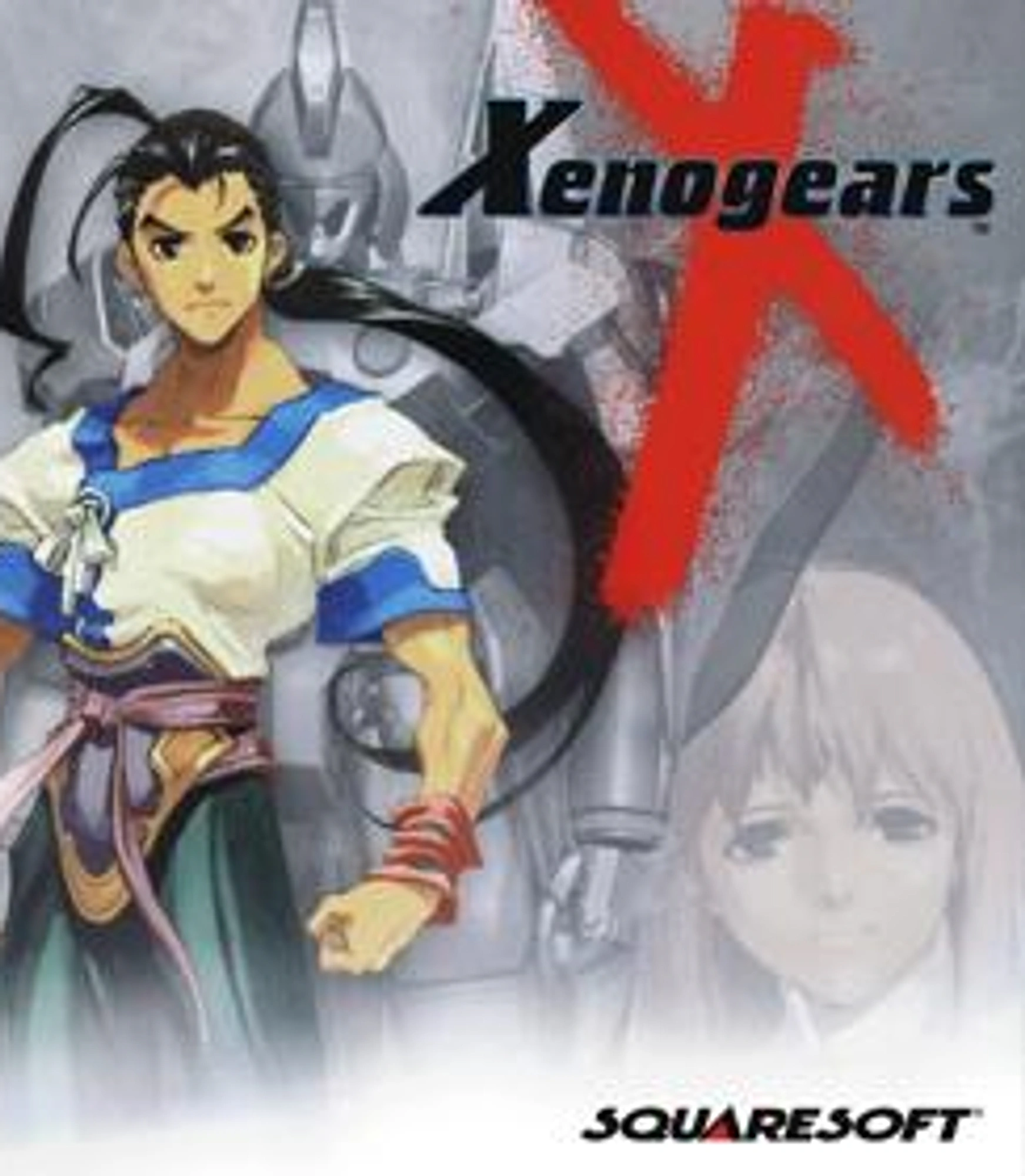
The verdict
Xenogears is the rare RPG whose ideas feel too large for one game. What begins with an amnesiac martial artist and an unexpected battle between giant machines becomes a meditation on identity, memory, love, the manipulation of faith, and the struggle to escape cycles of suffering. Its narrative ambition is why Xenogears sits at the very top of Fabled Cartridge's JRPG ranking.
That does not make it flawless. The second disc changes the way the story is presented, several dungeons and platforming sequences are cumbersome, and both combat systems can fall into repetition. Yet its finest moments are so exceptional that they outweigh those compromises. This is a recommendation for players willing to meet a demanding, occasionally messy game on its own terms.
Story and worldbuilding
The strongest feature is the way every apparently separate conflict gradually locks into a much older history. Fei's guilt about Lahan, the political rivalry between Aveh and Kislev, the secretive nation of Solaris, the Ethos, and the Gears each make sense in isolation before their meanings are radically recontextualized. The revelations are not simply bigger villains or higher stakes: they change what it means to be human in this world.
Xenogears draws on science fiction, religious imagery, psychology and philosophical language, but its emotional core is intensely personal. Fei and Elly anchor the enormous mythology; Citan, Bart, Billy, Maria, Emeralda and the wider party help give its varied societies texture. The narrative is unusually patient in asking players to question what its characters remember, believe and choose.
Characters and emotional stakes
Fei is more than the familiar JRPG hero with a missing past. The story examines his fractured self-understanding without treating its answers as a mere late-game trick. Elly's competing loyalties, vulnerability and agency turn the central relationship into something with real consequence for the world's history.
Bart brings exuberance and impulsive courage to a cast that could otherwise drown in its own seriousness. Citan's apparent calm makes his role particularly compelling. Even characters whose arcs receive less screen time help communicate the game's central question: how much freedom does anyone possess when the foundations of their world were built to control them?
On-foot combat: expressive, then repetitive
Battles on foot use an action-point system that lets each character chain weak, medium and strong attacks into combinations. Repeatedly performing input patterns teaches Deathblows, and discovering a new one delivers the satisfying sensation of learning a martial-arts technique rather than merely selecting a stronger spell.
The trade-off is that ordinary encounters increasingly reward familiar attack sequences. Some Ether abilities and character options feel less essential than the spectacle of Deathblows, while the random encounter rate can interrupt exploration. The system is memorable, but it is not as tactically varied across a full playthrough as its initial novelty suggests.
Gear battles: scale with real constraints
Once the party climbs into its towering Gears, fuel, equipment upgrades, attack levels and maintenance matter as much as raw power. Gear fights feel distinct from fighting on foot: heavy machinery gives major encounters a sense of scale, and careless fuel use can make a difficult sequence spiral out of control.
The downside is the upkeep. Gear tuning is less flexible than one might wish, and long stretches of combat can turn resource management into friction rather than drama. Nonetheless, the contrast between person-sized and mechanized battles remains one of Xenogears' defining mechanical ideas.
Exploration, art and soundtrack
Its sprites inhabit a fully rotatable 3D world, giving towns, ruins, battlefields and monumental structures a distinctive look. The visual style still communicates personality and scale; confusing camera angles and exacting jumps are much less graceful. Some platforming sections are particularly frustrating when random encounters interrupt the attempt.
Yasunori Mitsuda's soundtrack is fundamental to the atmosphere. The melodies can be intimate and mournful or grand and foreboding, letting a dense script breathe. Alongside the expressive character portraits and animated sequences, the music does substantial storytelling work.
The second disc problem
The shift in disc two is unmistakable. Instead of letting players experience every major journey at the same pace as the first disc, the game often recounts events through narration and still scenes, with battles and selected playable passages interspersed. Important material remains, but parts of it feel summarized rather than dramatized.
It is fair to call the final act uneven without dismissing it. Some of Xenogears' most revealing and emotionally powerful scenes occur in this compressed section. The problem is not a lack of ambition, but an uneven delivery that stops the playable adventure from matching the full sweep of the story.
Who should play Xenogears?
Play it if you value long-form, intricate storytelling; themes that reward reflection; a cast bound to the world's deepest secrets; and giant-robot drama in a richly imagined setting. Expect slow text, sometimes archaic interface design, frequent battles and stretches where the narrative takes priority over active play.
Xenogears earns its place among the greatest JRPG stories not by being immaculately polished, but by attempting something unusually bold and giving those ideas real emotional weight. If the story is your main reason for playing an RPG, it is essential.