Ar tonelico: Melody of Elemia Review
A wonderfully strange science-fantasy RPG where learning someone's inner world can matter as much as learning a new spell.
Go to game entry →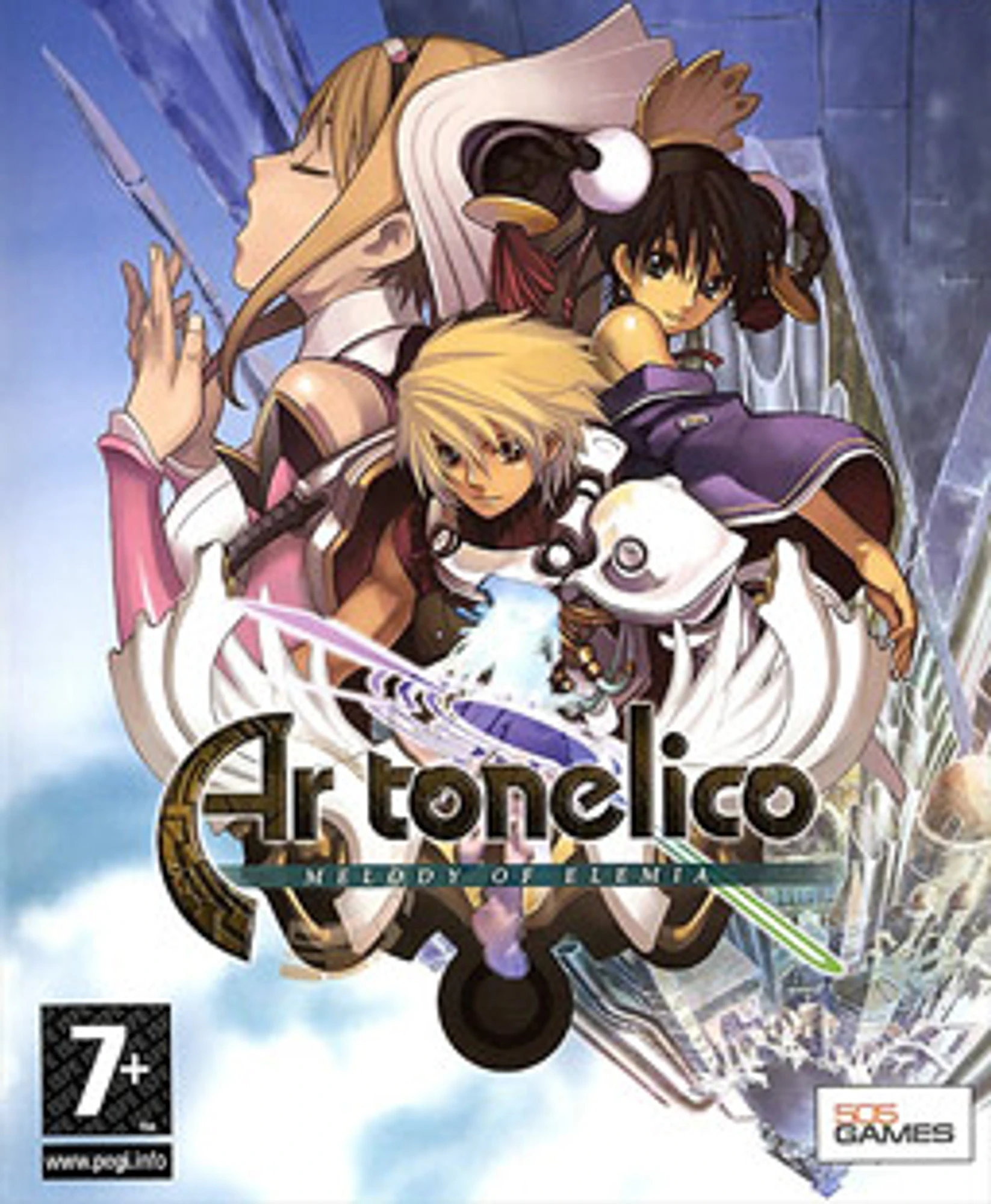
The verdict
The original Ar tonelico has a much clearer identity than its modest technical presentation might suggest. Here, music is a form of power, the enormous tower is both setting and civilisation, and developing a relationship with a Reyvateil can literally make the party stronger. These ideas are unusual enough individually; the attraction is how naturally the game connects them.
Its combat is simpler and slower than the ambitious system introduced in Ar tonelico II, and some relationship material and fanservice will not suit everyone. But as the beginning of the trilogy's worldview, Melody of Elemia has an enormous amount of imagination.
A world built around a tower and a song
The tower of Ar tonelico supports communities in a setting where technology, catastrophe and survival cannot be separated. Reyvateils sing magic that matters to the world's workings, and the Hymmnos language gives major songs a role beyond the soundtrack. Music can be ritual, memory, technology and personal expression at once.
The setting is part of the appeal because it never feels like a generic fantasy kingdom. Distinct groups and layers of the tower suggest a much wider history, while the melodramatic story invests its science-fantasy concepts in recognisable relationships.
Cosmospheres make relationships playable
Diving into a Reyvateil's Cosmosphere means visiting an inner world structured around fears, contradictions and memories. Progressing through these scenes reveals more about the character and unlocks Song Magic that changes how she participates in battle.
I love the principle: gaining a more powerful ability is tied to understanding another person. This is stronger than treating character development as an unrelated reward for reaching a specific level. It also means substantial portions of the experience are dialogue-heavy, and players who prefer battles to relationship scenes may find the rhythm uneven.
Crafting, battle roles and atmosphere
Grathmelding and synthesis make the familiar Gust crafting identity central to progression, while front-line characters protect singers who supply large-scale magic. The combat does not have the same interactive attack and defence rhythm as the sequel, but the dependency between fighters and Reyvateils already gives battles a clear personality.
The colourful character art and Hymmnos vocal performances are major strengths. The early PS2-era presentation shows its limits, and not every secondary system has the transparency or elegance it deserves. Still, songs carry emotional and narrative weight that more technically polished games rarely achieve.
Final thoughts
Melody of Elemia is one of those RPGs I value because it builds an entire experience around ideas few other series attempt. The tower, the music, the Cosmospheres and crafting all belong to the same unusual world. Its rougher combat and indulgent storytelling are real trade-offs, but its identity is exceptional.