Radiant Historia Review
Time travel becomes an elegant RPG structure rather than a gimmick, supported by grid-combo battles and an unusually grounded protagonist.
Go to game entry →Watch original video review →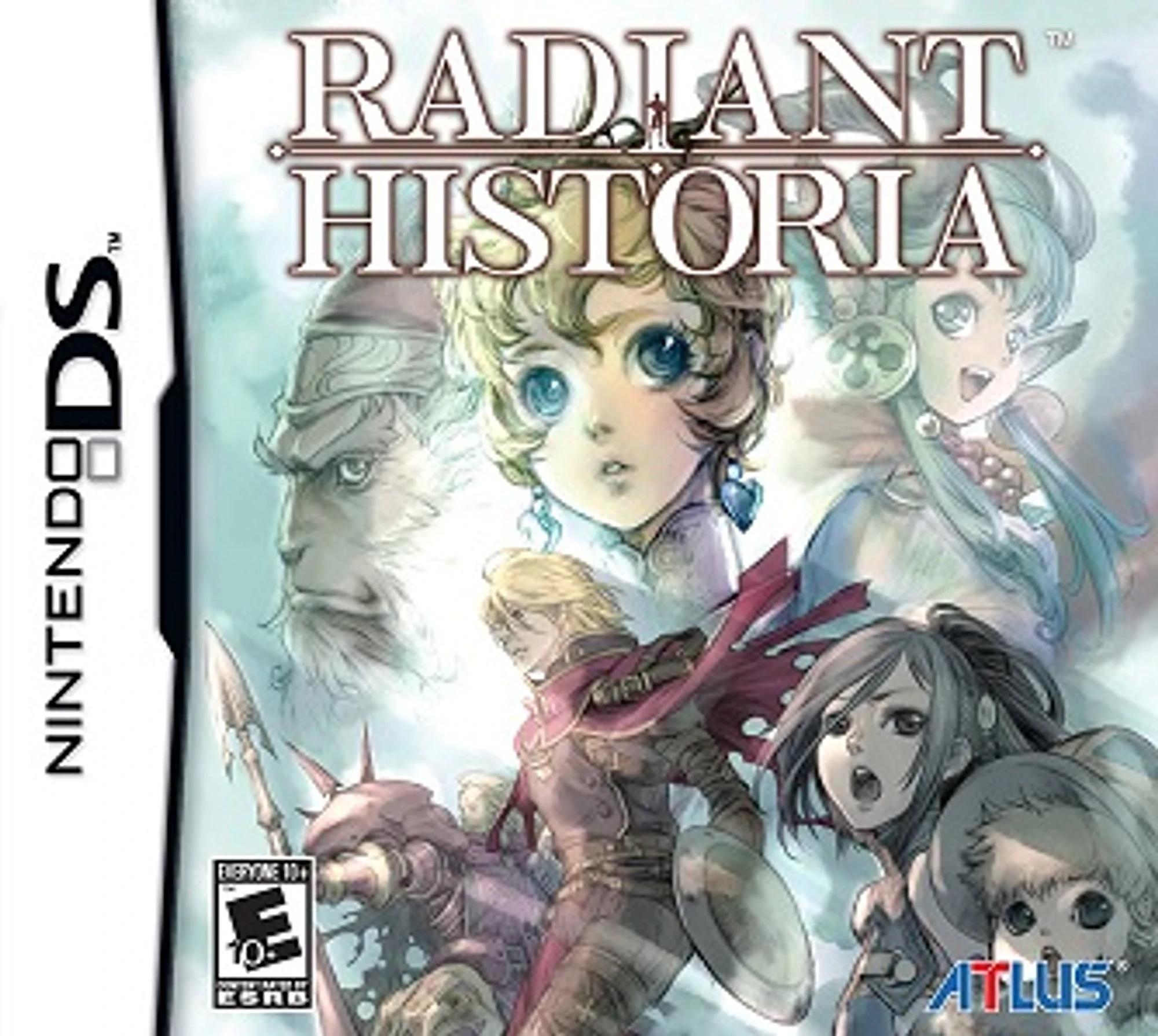
The verdict
Radiant Historia: Perfect Chronology is one of the most intelligent time-travel RPGs I have played. Stocke's ability to move between two histories is not merely a way to show alternate dialogue. The player regularly uses knowledge from one branch to resolve situations in another, and the White Chronicle makes the relationships between events understandable.
I favour the 3DS Perfect Chronology release because of its conveniences, added material and voice acting, even though the original DS narrative is arguably tighter and some players will rightly prefer its character portraits.
Two histories, one connected journey
Stocke begins as an agent of Alistel in a world threatened by desertification and conflict. When a disastrous mission gives him the White Chronicle, failures become opportunities to learn. A blocked route in one timeline may require evidence, an ability or a relationship developed in the other. The mechanic turns the whole story into a series of purposeful reconsiderations.
Stocke is capable and understated without feeling emotionally empty. Rosch, Raynie, Marco and the supporting cast reflect difficult questions about loyalty, sacrifice and political decisions. The bigger twists are best left unspoiled because their impact comes from seeing the timelines change.
Grid battles and turn manipulation
Enemies occupy a three-by-three formation, and your party can push, pull and stack them so a single attack hits several opponents. It turns ordinary encounters into satisfying little positioning puzzles. The Change command adds another layer by allowing actions to be reordered, even temporarily giving enemies opportunities in exchange for a stronger sequence later.
Long combos and well-timed stacks reward planning more than simply choosing the strongest move. Perfect Chronology adds further options such as support attacks, while elemental abilities, buffs and Mana Bursts keep fights varied. When it works, the combat is deliberate without becoming slow.
What the expanded edition adds
Perfect Chronology introduces Nemesia and Possible Histories, alternate scenarios that offer additional context and challenges. Players can interweave them with the main story or keep them more separate. I enjoy having that content available during a playthrough, although not every extra chapter is essential to the original two-history design.
The revised portraits are cleaner and the voice work adds personality. The original's somewhat sharper artwork has its defenders, and repeated timeline travel can occasionally turn into routine backtracking. Yoko Shimomura's soundtrack remains a compelling reason to spend more time in this world.
Final thoughts
Radiant Historia succeeds where many time-travel stories become untidy: it makes revisiting decisions an intuitive part of both plot and gameplay. Stocke is memorable, the battles have a distinctive spatial language, and the central journey is emotionally grounded. Perfect Chronology is my preferred version, provided you appreciate that extra content sometimes trades the original's tightness for breadth.