
Radiant Historia — Complete Story Recap & Ending Explained
Stocke rewrites two histories to stop desertification and discovers why Heiss fears a future that demands sacrifice.
Read spoiler-light review →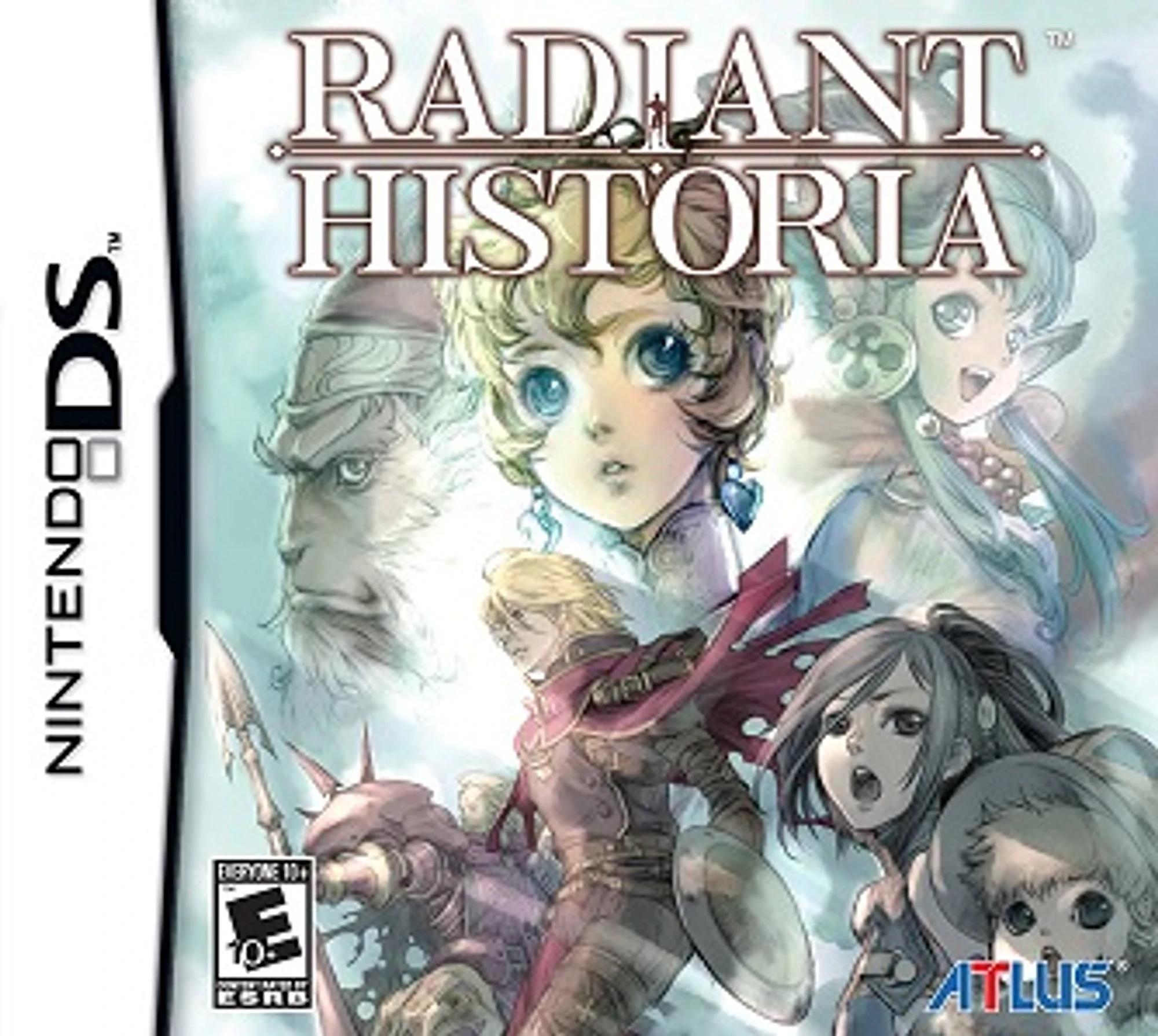
This recap reveals the central mysteries, character deaths, betrayals and ending of Radiant Historia. Read the spoiler-light review first if you have not completed the story.
The White Chronicle
Intelligence agent Stocke receives a mysterious White Chronicle from his superior Heiss before a mission goes disastrously wrong. In Historia he discovers that he can revisit turning points, move between two histories and carry knowledge from one branch into another. Raynie, Marco and his wider companions become essential as the conflict between Alistel and Granorg grows.
The Sand Plague and the sacrifice
Vainqueur is dying as its mana is drained into spreading desert. Stocke learns that the White and Black Chronicles were made to manage this catastrophe through repeated alterations of time and a sacrificial ritual. Heiss, once selected as the sacrifice, rejected that destiny and uses the Black Chronicle to impose his anger on the course of history.
Heiss and the competing endings
Stocke confronts Heiss, whose despair turns him into the monstrous Apocrypha through the accumulated power of past sacrifices. In the normal ending Stocke accepts his own death as the necessary sacrifice to delay disaster. In the more complete original conclusion, Heiss finally believes in Stocke's hope for humanity and takes his place, allowing Stocke to live.
Ending explained: Perfect Chronology's expanded resolution
The 3DS edition adds Nemesia's Possible Histories and the Red Chronicle. These reveal a deeper cause of the Sand Plague: the Singularity, born from ancient experiments connected with Rhodan. Bringing the Chronicles' powers together allows the party to defeat it, breaking the need for further human sacrifices. The expanded ending gives Stocke and Heiss a chance at reconciliation and a future not purchased with another required death.