
Kingdom Hearts Re:Chain of Memories Review
A clever memory mystery and unusually strategic card battles that feel unlike almost any other Kingdom Hearts adventure.
Complete Kingdom Hearts chronology →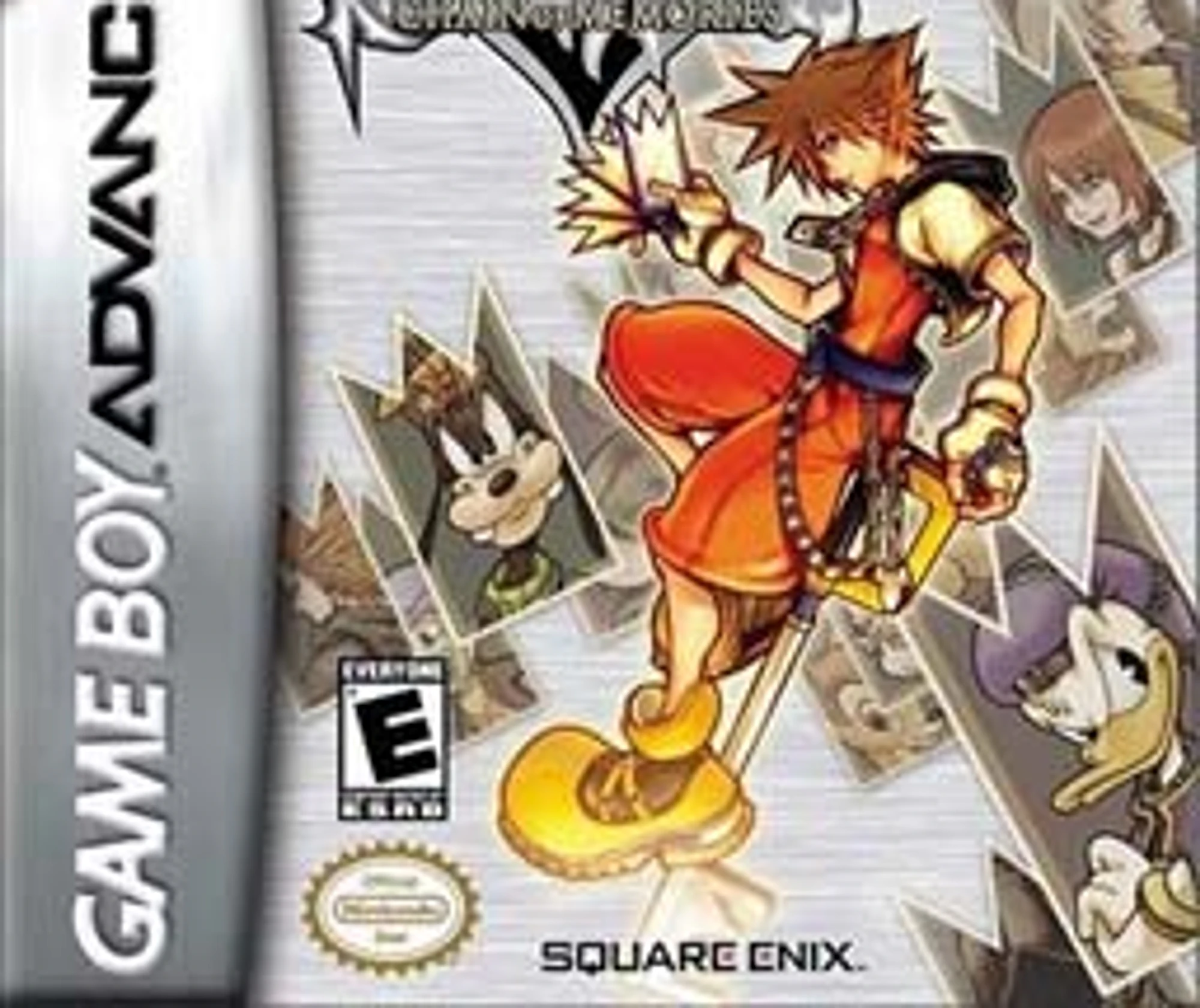
Overview
A clever memory mystery and unusually strategic card battles that feel unlike almost any other Kingdom Hearts adventure.
A story about manipulated attachment
Chain of Memories' central trick is more unsettling than a standard amnesia plot. Sora acts sincerely, but the reasons for his loyalty have been manufactured, and Naminé is coerced into becoming the instrument of that cruelty. Castle Oblivion turns memory into both an environmental rule and a moral question.
Cards replace freeform action
Every attack, spell and item depends on a card value; matching or exceeding enemy cards and assembling Sleights forms the core of combat. The deck-building layer gives planning a real role, and strong decks can exploit boss vulnerabilities in satisfying ways. Conversely, players who want uninterrupted swordplay may find the repeated card breaks irritating.
The GBA original and the remake
The original Chain of Memories was built around an isometric handheld perspective; Re:Chain of Memories translates the same fundamental system into 3D arenas. That adds cinematic spectacle but also makes card interruption feel less naturally fitted to the camera and movement. Choosing between versions changes how elegant the battles feel.
Repetition and Riku's route
Room cards turn Castle Oblivion into an intentionally modular series of spaces, but the visual and encounter repetition becomes exhausting across two campaigns. Riku's more constrained combat progression is often a useful corrective: it places greater emphasis on understanding what the game gives you rather than optimizing an endless deck.
Verdict
Re:Chain of Memories deserves its place for the strong Naminé/Riku material and its willingness to experiment. Its mechanics are both its selling point and its dividing line; anyone approaching it as Kingdom Hearts 1.5 is likely to misunderstand what it does best.